How to Choose a Ceiling Fan: Size, Height and Style
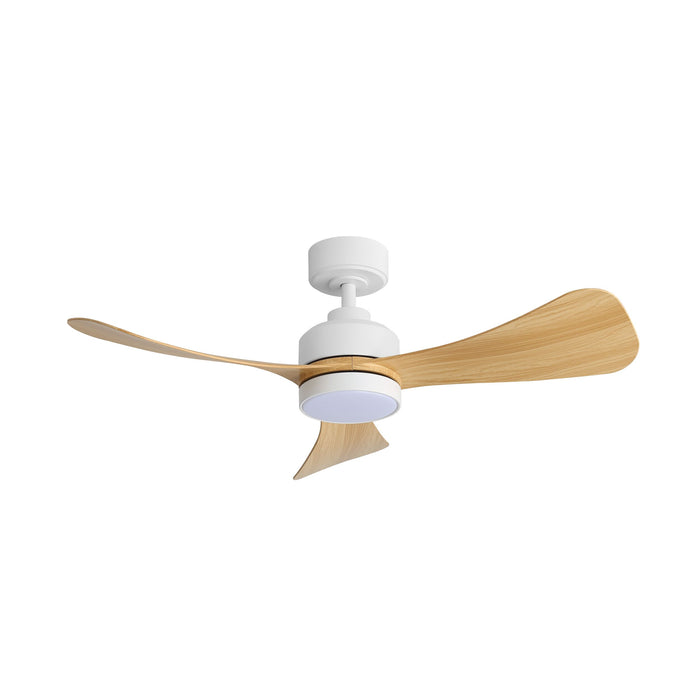
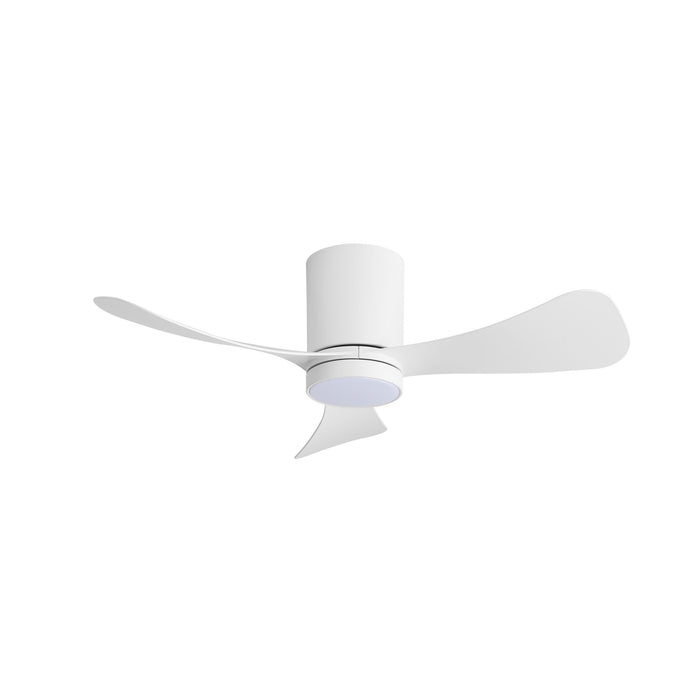
Ceiling fans tend to get chosen in a hurry, usually the week the first heatwave rolls in. That's a shame, because a fan is one of the few things in a room you look at every single day. Even our most compact model spans 106cm, about the length of a coffee table, and it hangs right in the middle of your ceiling.
Our new range of ceiling fans is designed to be looked at as much as felt. You'll find solid timber and timber-look blades, black, white and satin nickel finishes, and quiet DC motors throughout. Because the range lives online, this guide covers what you'd normally work out standing in a showroom: size, ceiling height, finish, lighting and where the fan will actually go.
Start with the room, not the fan
Fan size is measured by blade span, which is the full width of the circle the blades sweep. The bigger the room, the bigger the span you need to keep air moving all the way to the corners.
Measure the length and width of your room and multiply them to get the floor area. Then use this as a starting point:
- Under 10m², such as a small bedroom or study: around 106cm to 120cm
- 10 to 16m², which covers most bedrooms: around 127cm to 132cm
- 16 to 25m², such as main bedrooms and living rooms: around 132cm to 142cm
- Over 25m², such as open-plan living and large rooms: 162cm and up, or two fans
If you're torn between two sizes, go up. A larger fan on a low setting usually moves air more gently and quietly than a small one working flat out.
In our range, that ladder runs from the compact Cove at 106cm, through Tide at 127cm and Harbour and Breeze at 132cm, to Coastline at 142cm. At the top are Harbour at 162cm and the Seabrook at 182cm, which is built for big open spaces.
Long, open-plan rooms are the one place where bigger isn't automatically better. Picture a kitchen, dining and living area in one long run. Two fans, one over the dining table and one over the sofa, will usually do a better job than one giant fan in the middle that never quite reaches either end.
Check your ceiling height before you fall for a fan
For safety, fan blades need to sit at least 2.1m above the floor. With a standard 2.4m ceiling, that doesn't leave much room to play with.
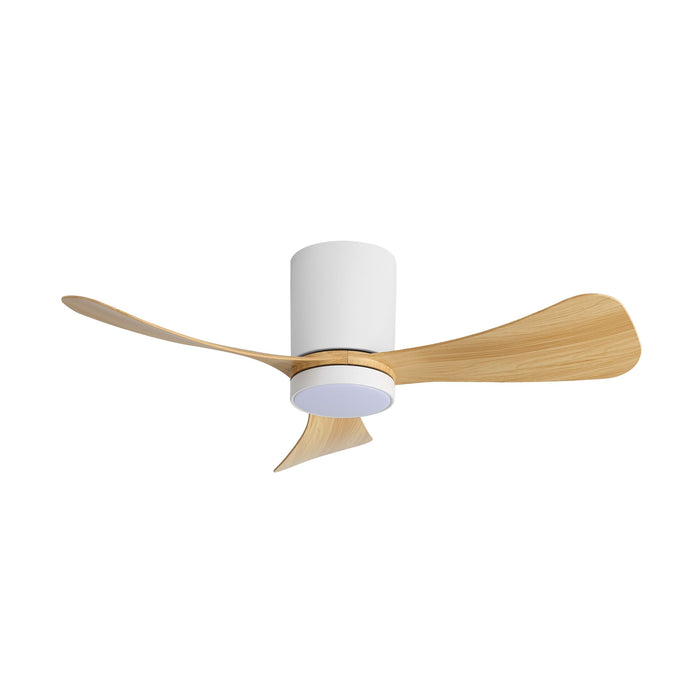
Every product page lists an overall drop, which is how far the fan hangs below the ceiling. Take that away from your ceiling height. If you're comfortably clear of 2.1m, a standard fan will work. If it's tight, look at a hugger fan instead. Huggers mount close to the ceiling, which makes them a natural fit for older homes, apartments and low bedrooms. The Cove Hugger is only about 28cm deep.
High ceilings bring the opposite problem. A fan mounted flush to a 3m ceiling spends its energy stirring air nobody's sitting in. A drop rod brings the fan down to where you'll actually feel it. Some fans include more than one rod length in the box (the Breeze comes with 12cm and 30cm rods), so check the product details for what's included.
Got a raked or sloping ceiling? Look for the ceiling pitch listed on the product page, and talk it through with your electrician before you order.
Why the whole range runs on DC motors
Every fan in our new range uses a DC motor. That has become the standard for good fans, and you'll notice why in the first week.
They're quiet, which matters most in a bedroom, where an AC fan's hum can be the thing keeping you awake. They also give you more control. Most of the range offers six speeds, from a barely-there drift for sleeping to a proper breeze on a 38-degree afternoon. And they're efficient to run, which counts when the fan is on all night from December through to March.
Each fan comes with a remote and a reverse mode. Reverse earns its keep in winter: run the fan slowly in reverse and it gently pushes the warm air that collects near the ceiling back down into the room. It's handy alongside a heater or split system.
Choose your blades and finish like you'd choose furniture
This is where a fan stops being an appliance and becomes part of the room.
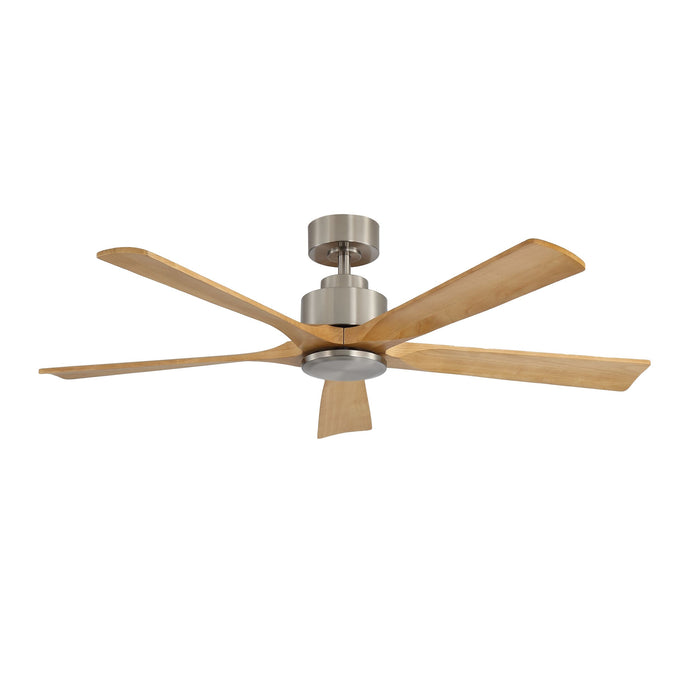
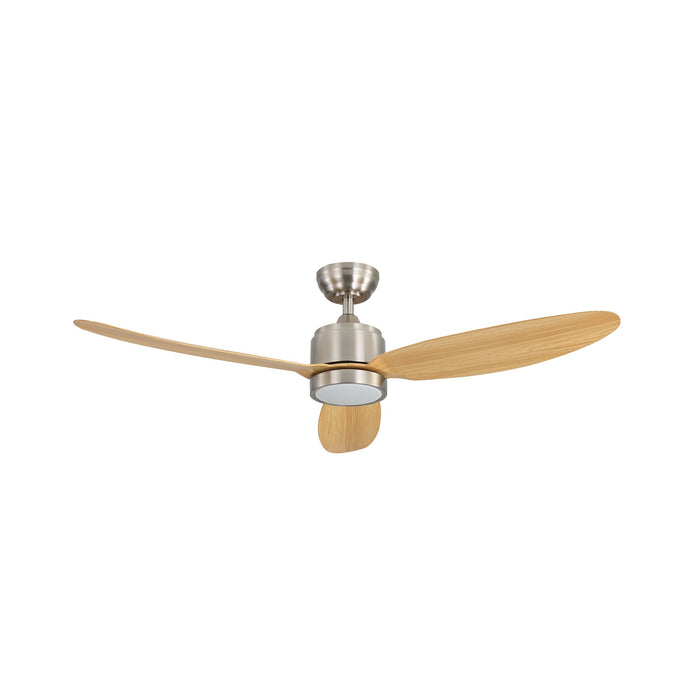
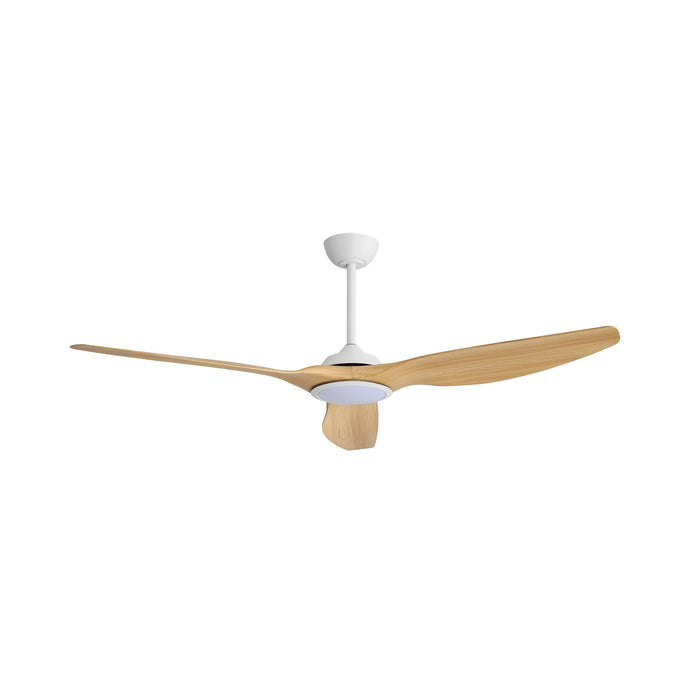
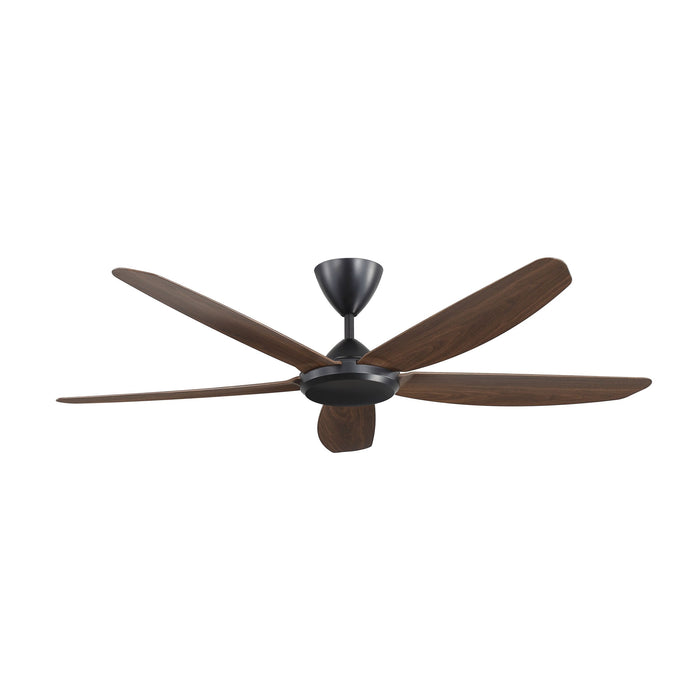
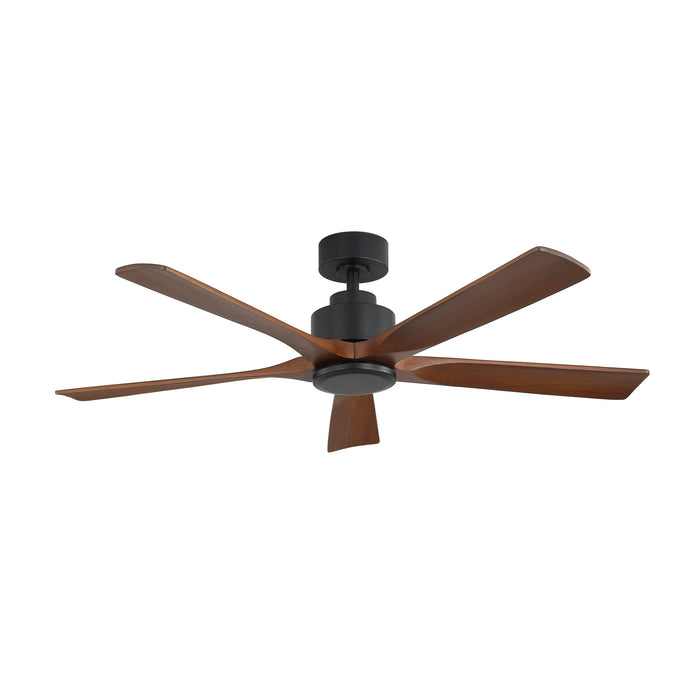
Start with the blades. Solid timber blades, like those on the Breeze in dark walnut or natural, bring real grain and warmth. They sit beautifully in a room that already has timber floors or furniture. Timber-look ABS blades on Harbour, Tide, Cove and Coastline give you a similar warmth with a lighter, low-maintenance finish. The Seabrook's black aluminium blades read cleaner and more architectural, the kind of fan that suits polished concrete and black window frames.
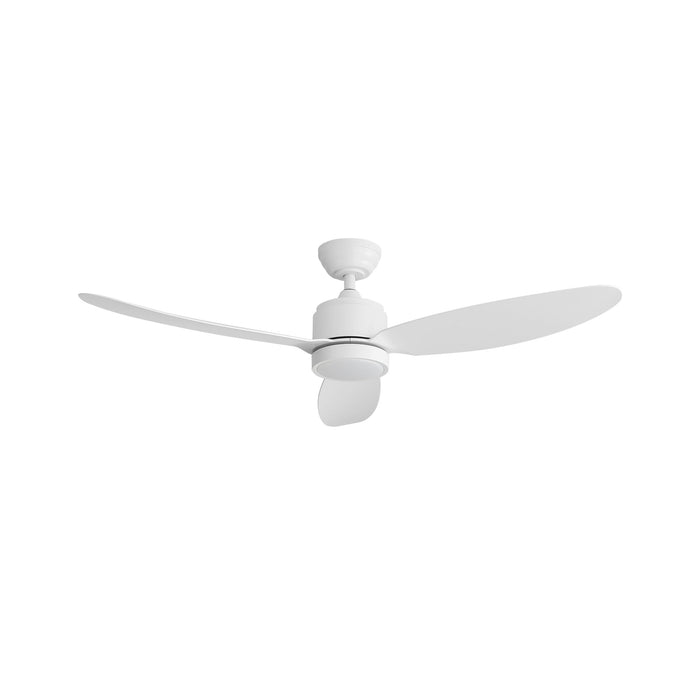
Then look at the body. A white fan on a white ceiling all but disappears, which is exactly what you want in a small bedroom or a room with plenty going on already. A black body does the opposite and becomes a feature. That works best when it echoes something else in the room, such as black tapware, a dark-framed mirror or metal-legged dining chairs. Satin nickel sits somewhere in between: softer than black, warmer than chrome.
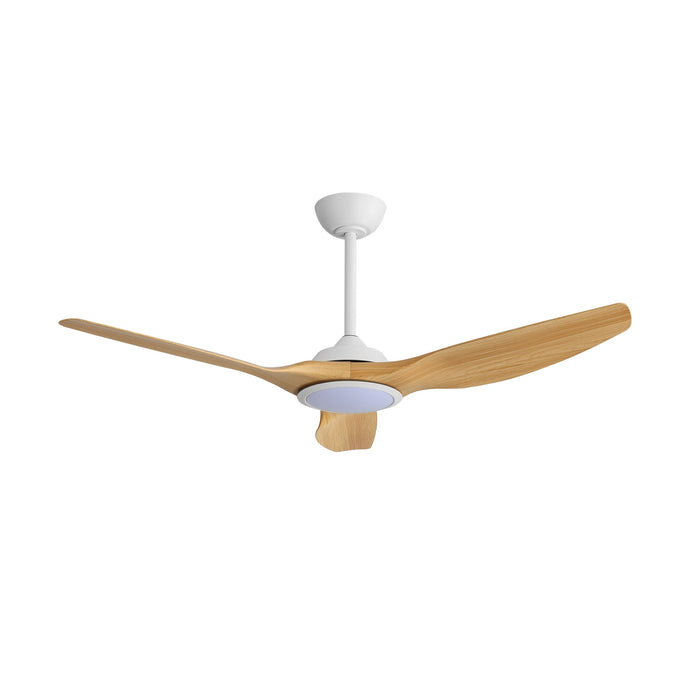
One simple rule tends to work. Match the blades to your biggest timber surface (floors, dining table or bed frame) and the body to your hardware. Oak floors and black door handles? A black fan with natural blades, like the Harbour, will look like it was always meant to be there.
Do you need a fan with a light?
In a bedroom, often yes. A ceiling fan usually goes exactly where the main light would, so a fan with a built-in light saves you choosing between them.
Cove, Cove Hugger, Harbour and Solace all have an integrated LED light. On models like the Cove Hugger and Harbour, the light switches between warm, neutral and cool white. You can keep it soft and warm in the bedroom and brighter in a study or kitchen.
The Breeze and Seabrook come without a light but accept an optional light kit, sold separately in fan accessories. You can add one now or leave it for later.
In living areas lit by downlights, you might prefer to skip the fan light altogether. Just watch the placement. Blades spinning directly beneath a downlight can create a flickering, strobe-like effect, so position the fan where its blades clear the nearest downlights. Your electrician can help with spacing.
Choosing an outdoor ceiling fan
On a still summer evening, a fan can be the difference between an alfresco area you use and one you only walk past.
Outdoor ceiling fans are made for covered spaces: verandahs, patios and pergolas with a solid roof. They aren't designed to sit out in direct rain. The detail to look for is the IP rating, which tells you how well a fan is protected against dust and moisture. The Solace is rated IP44 for covered outdoor use and has an integrated light, in white, black or satin nickel. Indoor-only fans, like the Breeze, should stay inside.
Size an outdoor fan the same way as an indoor one, by the area you want to keep cool. Then hang it over where people actually sit, above the outdoor lounge or dining setting rather than the middle of the deck. If you live near the coast, salt air is hard on any fitting, so give the fan a regular wipe down with a damp cloth.
Buying a fan online: what to check before you order
You'll find our fans online rather than on the shop floor. Before you add one to your cart, run through these details on the product page:
- Blade span, checked against your room size
- Overall drop, checked against your ceiling height
- Lighting: integrated, light kit compatible, or none
- IP rating, if the fan is going anywhere near outdoors
- What's in the box, such as the remote and drop rods
Every ceiling fan needs to be installed by a licensed electrician. It's worth booking one when you order, ideally before the first heatwave, when everyone else has the same idea. If you're swapping out an old fan or light, ask them to check the mounting point while they're up there. Delivery timing for your area is listed on our delivery page.
After that, it's simply a matter of choosing the one you'll be happy to look up at every day.
Shop the Look
-
Breeze 132cm Indoor DC Fan - Black with Dark Walnut Timber Blades
$499.00Multibuy Price $374.00
-
Solace 132cm Outdoor DC Fan - Black with Black ABS Blades
$299.00Multibuy Price $224.00
-
Harbour 132cm Indoor DC Fan - Black with Natural ABS Blades
$499.00Multibuy Price $374.00
Harbour 132cm Indoor DC Fan - Black with Natural ABS Blades
$499.00Multibuy Price $374.00
Harbour 162cm Indoor DC Fan - White with Natural ABS Blades
$549.00Multibuy Price $409.00
-
Cove 106cm Indoor DC Fan - White with Natural ABS Blades
$299.00Multibuy Price $224.00
-
Breeze 132cm Indoor DC Fan - Satin Nickel with Natural Timber Blades
$499.00Multibuy Price $374.00
-
Solace 132cm Outdoor DC Fan - Satin Nickel with Natural ABS Blades
$349.00Multibuy Price $259.00
-
Coastline 142cm Indoor DC Fan - Black with Walnut ABS Blades
$349.00Multibuy Price $259.00
-
Cove Hugger 106cm Indoor DC Fan - White with Natural ABS Blades
$299.00Multibuy Price $224.00
-
Harbour 132cm Indoor DC Fan - White with Natural ABS Blades
$499.00Multibuy Price $374.00
Harbour 132cm Indoor DC Fan - White with Natural ABS Blades
$499.00Multibuy Price $374.00
Harbour 162cm Indoor DC Fan - White with Natural ABS Blades
$549.00Multibuy Price $409.00
-
Solace 132cm Outdoor DC Fan - White with White ABS Blades
$299.00Multibuy Price $224.00
-
Cove Hugger 106cm Indoor DC Fan - White with White ABS Blades
$299.00Multibuy Price $224.00
-
Harbour 162cm Indoor DC Fan - White with Natural ABS Blades
$549.00Multibuy Price $409.00
Harbour 162cm Indoor DC Fan - White with Natural ABS Blades
$549.00Multibuy Price $409.00
Harbour 132cm Indoor DC Fan - Black with Natural ABS Blades
$499.00Multibuy Price $374.00
Inspiration
Related Articles
-
outdoor furnitureStyle CuratorRead articleWhat outdoor living ideas is our Product Designer excited about this season?
Meet Monica, Product Designer and discover the colours, shapes and ideas inspiring our new Outdoor Collection.
-
Discover Inspiring Home Life Tips & TrendsRead articleWhat master bedroom ideas actually create a retreat?
Most master bedrooms in Australia and New Zealand do one job. They hold a bed and a doona nobody folds properly. That is not a retreat. A retreat has a mood. It has layers, a colour story that holds together, and furniture that earns its...
-
Discover Inspiring Home Life Tips & TrendsRead articleHow do you care for leather furniture to keep it looking its best?
Leather furniture has a reputation for ageing beautifully, but that doesn't happen by accident. Like timber, natural fibres and other premium materials, leather benefits from regular care. A simple maintenance routine can help preserve its appearance, maintain comfort and support the longevity of your furniture...
-
Discover Inspiring Home Life Tips & TrendsRead articleWhat living room ideas make a space feel like yours?
There's a version of this article that just lists trending colours and tells you to buy a statement cushion. This isn't that. Living room ideas are everywhere right now; Pinterest, Instagram, every interiors blog from here to Copenhagen. The problem isn't a shortage of inspiration....
-
Discover Inspiring Home Life Tips & TrendsRead articleHow do you decorate with pink furniture without making your home feel childish?
Pink furniture gets people nervous. That's the honest starting point. Not because the colour is actually difficult to use, but because most of us have a fixed mental image of what pink furniture looks like. Bubblegum. Gloss. A little girl's bedroom. The right pink is...
-
Discover Inspiring Home Life Tips & TrendsRead articleHow to Create Better Feng Shui in Your Bedroom
A bedroom can have the right furniture and still not feel right. Most of the time, it comes down to where things sit. Feng Shui is the ancient Chinese practice of arranging your environment to support better energy flow. In a bedroom context, that means...
-
Discover Inspiring Home Life Tips & TrendsRead articleWhy does every living room need both a coffee table and a side table?
It is a question we hear regularly in our stores and online: do you actually need both a coffee table and a side table, or will one do the job? Most living rooms have a coffee table. Fewer have a side table. And a surprising...
-
Discover Inspiring Home Life Tips & TrendsRead articleHow do you choose the right coffee table for your living room?
It is one of the most common conversations we have in store: a customer who knows roughly what they want but cannot quite land on the right one. It sounds straightforward until you're standing in a showroom, or scrolling through 47 options online, and suddenly...
-
Discover Inspiring Home Life Tips & TrendsRead articleHow to choose and care for a Washable Rug
Most people don't regret buying a rug. They regret buying the wrong one.The one that showed every paw print by day two. The one that couldn't go near a washing machine. The one that looked great in a photo and spent three months being carefully...