June 30, 2026 14 min read

How do you choose the right coffee table for your living room?

By Early Settler

It is one of the most common conversations we have in store: a customer who knows roughly what they want but cannot quite land on the right one. It sounds straightforward until you're standing in a showroom, or scrolling through 47 options online, and suddenly every choice feels like it could go wrong. Too big and the room closes in. Too small and the whole seating arrangement looks unfinished. Wrong shape for the sofa and the flow of the room just feels off.

The coffee table is one of those pieces that most people underestimate when they're buying it and overestimate when they get it wrong. This guide covers the decisions that actually matter: size, shape, material, height, and how to style what you end up with.

Are coffee tables still in style?

Very much so. The question has been floating around online long enough to be worth addressing directly: yes, coffee tables are still relevant, and no, the ottoman-as-coffee-table trend has not replaced them.

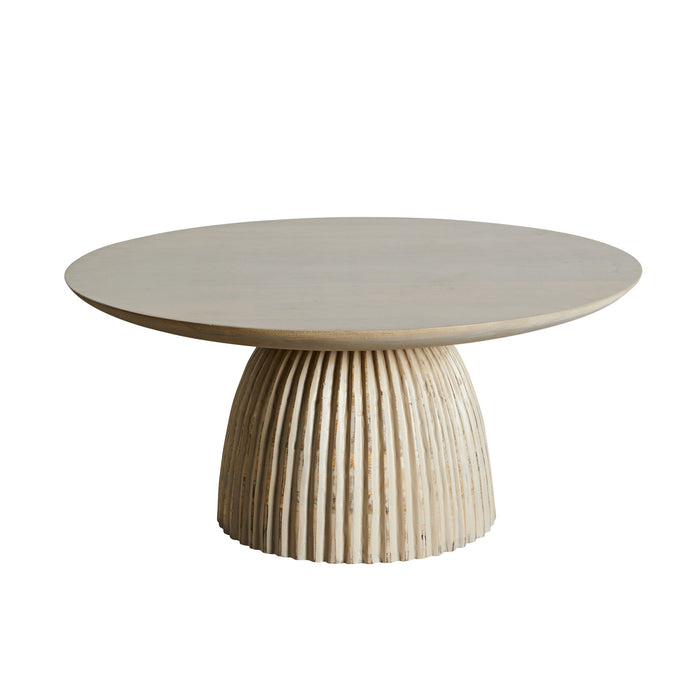
What has changed is what people want from them. The old idea of matching the TV unit has largely disappeared. Coffee tables now carry more visual weight in a living room and are increasingly chosen as a deliberate style statement rather than a functional afterthought. Round forms, organic edges, sculptural bases, and raw or textured materials have pushed the category into more interesting territory than it occupied ten years ago.

The short answer: coffee tables are not going anywhere. The longer answer is that what counts as a good one has shifted considerably.

What coffee table styles are trending right now?

A few directions are worth knowing about, not because trends should drive every decision, but because understanding what's current helps you make a choice that will look considered rather than dated.

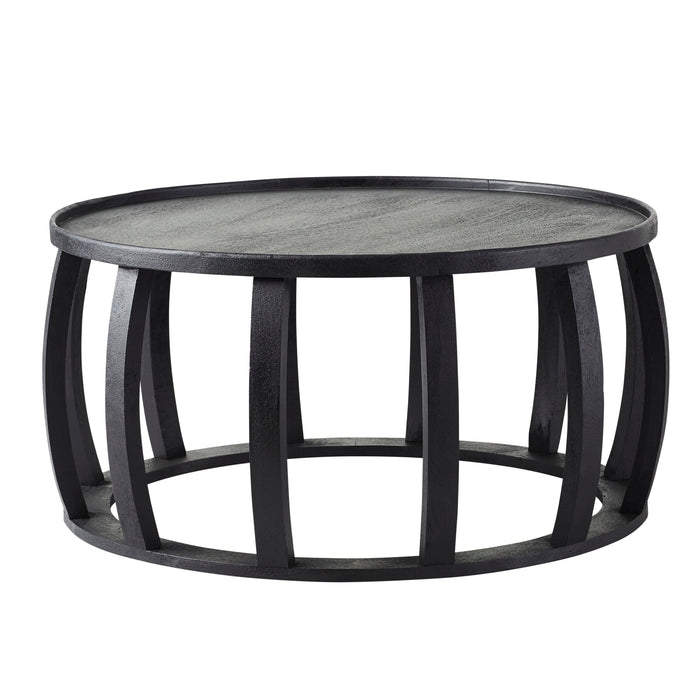
Dark and black-stained timber

This has had a sustained run, and it's not a passing moment. Dark and black-stained timber adds visual weight and contrast without competing with other colours in the room. Against a light rug or a warm-toned sofa, it creates definition. Against a dark sofa, it reads as a deliberate tonal choice. There is a full section below on black coffee tables specifically if that is the direction you are considering.

Organic shapes and curved edges

These have replaced the pure rectangle as the default form. Coffee tables with rounded corners, soft oval silhouettes, or irregular edges feel less rigid in a room and tend to work better with modular and curved sofas, which are also having their moment.

Travertine and stone-look finishes

These have moved from high-end interiors into the mid-market. The appeal is texture and perceived quality. Stone-effect tables often use sintered stone or porcelain rather than natural travertine, which makes them more practical for everyday use.

Marble

Marble retains a following and has become more versatile as pairing conventions have loosened. White marble with warm timber legs. Black marble with brushed gold. The material lends itself to contrast styling.

Nesting tables

Nesting tables continue to be a practical answer for smaller rooms and flexible living arrangements. Two tables that store together and separate when needed. Not glamorous, but useful.

Mixed materials

Timber top with metal base, stone with rattan, marble with blackened steel. These combinations are now more common than single-material pieces at most price points. They give a table more visual interest without requiring the room to match perfectly.

Timber

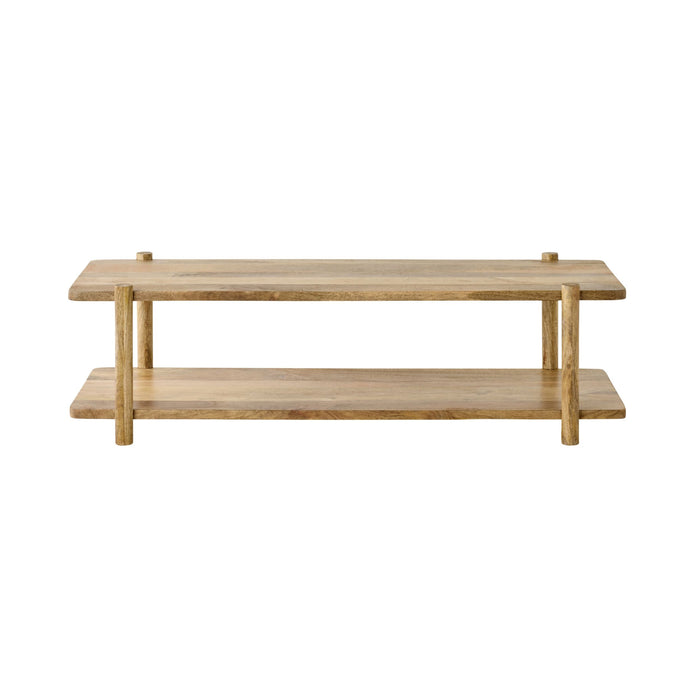
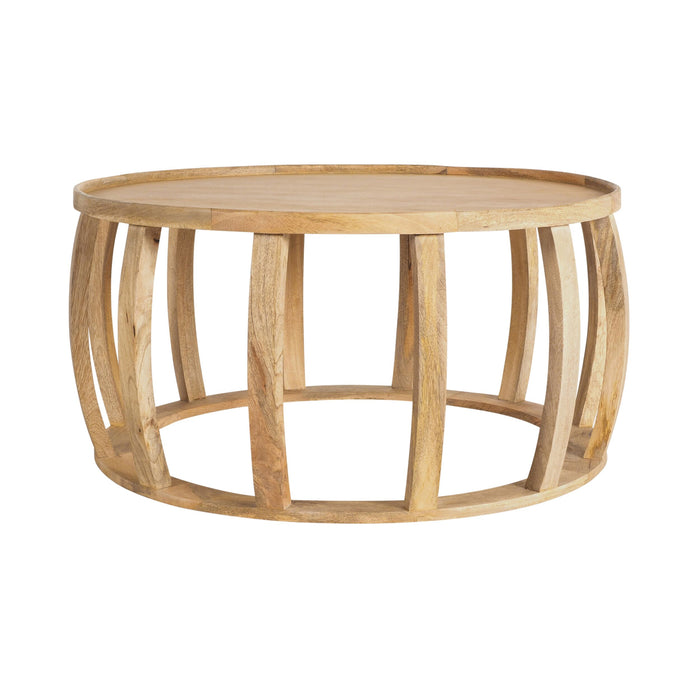
Timber deserves its own moment here. It spans the full range of the coffee table category and right now the options are broader than they've been in years. From the lightest raw oak to richer cherry and deep walnut stains, timber brings warmth and natural balance to a room in a way few other materials do. What's more interesting is what's happening at the edges of the market. Decorating got a little same-same for a while, and now there's a visible push back against that. Early adopters are revisiting mahogany, which is finding a quiet revival in designer spaces and independent interiors. The personality is coming back. If you've been drawn to timber but weren't sure which direction to take, this is a good moment to be bold rather than safe.

Should I choose a round or rectangular coffee table?

Both work. But they suit different situations, and the choice matters more than most people realise.

Rectangular coffee tables are the standard choice for a reason. They suit most sofa configurations, particularly a three-seater against a wall or floating in the centre of a room with chairs either side. The length of a rectangular table mirrors the length of the sofa, which creates a natural sense of proportion. For a sectional or L-shaped sofa, a rectangular table also tends to fill the space more logically.

Round coffee tables are the better choice in a few specific scenarios. In smaller living rooms, the absence of sharp corners means easier movement around the table, and the softer shape tends to make the space feel less cluttered. They're also a natural fit for curved or modular sofas, where a rectangle can create an awkward visual contrast. If there are children in the household, the lack of corners is a practical consideration, not just an aesthetic one.

One thing that sometimes goes overlooked: a round table in a square room often looks more considered than a rectangle. The contrast between room shape and table shape creates balance rather than doubling down on the geometry.

What shape coffee table works best in a small living room?

Round tables are the most forgiving in tight spaces, but shape alone is not the only consideration. The base design matters just as much as the outline.

A coffee table with legs rather than a solid base allows the floor to show beneath it, which reads as space rather than mass. Nesting tables can be pulled apart when guests arrive and tucked together day-to-day. Both of these choices reduce the visual weight of the table without reducing its actual function.

What to avoid in a small room: a table with a very large footprint, a solid plinth base, or a shelf beneath that collects clutter and makes the space look busy. Storage coffee tables sound like a good idea until they become a place to hide things you will need to move to use the table properly.

If the room is tight, also consider whether two smaller tables or a pair of nesting tables serve better than one medium table. Less mass, more flexibility.

Do timber coffee tables need to match your timber floors?

No. And this is worth saying plainly because it stops a lot of people from buying pieces they'd otherwise love.

Mixing wood tones throughout a home is not only acceptable, it's usually preferable. A home where every timber surface matches can read as flat and overly coordinated. Different tones layered through a space create depth.

If you're nervous about putting cool and warm timber shades in the same room, a rug is the simplest solution. Placed under the coffee table, it acts as a visual anchor that blends the different hues without requiring them to match.

How high should a coffee table be, and does height actually matter?

It matters more than most buying guides suggest. A coffee table that sits significantly lower or higher than your sofa seat creates awkward use and looks visually unresolved.

The standard recommendation is for the coffee table to sit within 5cm of the sofa seat height. Standard sofa seat heights sit roughly between 43cm and 48cm, so most coffee tables land in the 40cm to 50cm range.

Lower tables (around 35-38cm) can work with deep, low-profile sofas, particularly modular and floor-level styles. Higher tables start to feel more like dining tables. The guiding principle is that someone sitting on the sofa should be able to reach drinks or a book without bending at an uncomfortable angle or stretching forward.

If you're buying online and cannot sit in the room with the table, measure your sofa seat height before you order.

What size coffee table should I buy?

This is the most common buying mistake, in both directions. Tables that are too small look lost. Tables that are too large block movement through the room and make the seating area feel crowded.

A few useful rules:

Length: the coffee table should be roughly two-thirds the length of your sofa. For a 2.4m sofa, that is approximately 1.6m. This gives visual proportion without the table extending past the ends of the sofa.

Width: the table should feel reachable from the sofa without leaning forward awkwardly. Somewhere between 45cm and 65cm wide is the practical range for most setups.

Clearance: allow at least 45cm between the table and the sofa. 50-60cm is more comfortable and allows for easy movement. Less than 45cm and the room starts to feel tight to navigate.

Height: within 5cm of the sofa seat height in either direction.

A quick check before buying: measure the gap between your sofa and any facing chair or second sofa, then subtract the clearance on both sides. That gives you the maximum workable length.

Is a marble coffee table a good choice?

Marble is a good-looking material and it performs well in the right context. The more relevant question is whether natural marble is worth the maintenance commitment compared to stone-effect alternatives.

Natural marble is porous, which means it stains without sealing and marks with acidic liquids, particularly wine and citrus. If a coffee table sits in a household where cups are placed directly on it and spills happen regularly, natural marble will show wear. It needs to be sealed on purchase and resealed periodically.

Sintered stone and porcelain marble-look surfaces are more practical for everyday use. They're non-porous, resistant to staining, and don't require sealing. The visual difference between a good porcelain marble and natural marble is minimal at a distance. For most real homes, this is the more sensible choice.

Where marble works best: in a room that leans into the material, with softer textures around it to balance the hardness. Wool rugs, linen cushions, warm timber legs on the table itself. It also suits a living room that is not the primary gathering point for heavy daily use.

What type of timber makes the best coffee table?

Timber choice affects both how the table looks and how it ages.

Oak is the most reliable choice at the mid-to-upper end of the market. It's dense, has a tight grain, resists dents and scratches well, and ages with a patina rather than deteriorating. Light oak and natural oak are versatile finishes that work with a wide range of interior palettes. Smoked or dark-stained oak gives the material more drama without losing the underlying quality.

Mango wood is used frequently at accessible price points. It's a wide-grained, naturally varied timber that gives tables real character. No two mango wood pieces look identical, which is part of the appeal. It's softer than oak and more susceptible to marking, so it suits rooms where the table is used for display and occasional use rather than heavy daily activity.

Reclaimed and recycled timber adds texture and history to a table. The imperfections are the point. Knots, grain variation, and tonal differences tell you this is a material with some provenance. These tables tend to work best in homes with an earthy, relaxed aesthetic rather than a very polished interior.

Black-stained timber achieves the high-contrast look without using a naturally dark wood. The stain sits on the surface, which means wear over time can reveal the timber beneath. Quality of the finish determines how well it holds. A good sealed black stain will last years; a cheaper one will show chips at the edges relatively quickly.

Veneers deserve more credit than they get. A quality engineered timber veneer over an MDF or particle board core is stable, light, and can carry a beautiful timber surface. The trade-off is that it cannot be sanded back and refinished the way a solid timber table can.

Are black coffee tables worth it?

Yes. And the reason they've become a staple rather than a trend is worth understanding.

Black adds depth to a neutral living room in a way that other colours don't. Most Australian and New Zealand homes default to warm whites, greiges, and soft naturals on walls and soft furnishings. Against those tones, a black coffee table creates contrast and visual anchor. It stops the room from reading as too soft or undifferentiated.

Black also sits differently to other strong colours in the sense that it recedes rather than competes. A terracotta cushion or a sage green armchair will fight for attention in a room. A black coffee table tends to define the space and let everything around it breathe.

The most common concern is whether black works with a dark sofa. It does, provided there's enough tonal variation in the room elsewhere. A black coffee table with a charcoal sofa needs light in the rug, the walls, or the accessories to prevent the space from reading as heavy.

How do you make a living room look bigger with a coffee table choice?

Honest answer: proportion is the thing that matters most. The wrong size table makes a manageable room feel cramped. The right size, placed correctly, makes the space feel resolved rather than squeezed.

An undersized table in a small room does not look spacious, it looks unfinished. A well-proportioned table that fits the two-thirds sofa rule, with 45-50cm of clearance all around, will always look more considered than a table chosen small in the hope of creating breathing room.

Beyond sizing, glass or acrylic tops are the most effective material choice for creating a sense of openness. Light passes through and the floor remains visible, which the eye reads as space. Leg-based designs over solid plinths work on the same principle. The more floor you can see, the larger the room reads.

Getting the size right first, then thinking about base style and material, tends to produce a better result than starting with aesthetics and hoping the proportions follow.

What can you use instead of a coffee table?

A few alternatives that work well in practice rather than just in theory:

A large round ottoman topped with a tray is the most common alternative and works well in relaxed, casual rooms. The advantage is softness and flexibility. The disadvantage is that hot cups need a heat-safe surface. Works best in informal interiors where the casualness suits the space.

Large baskets and low benches can also provide a surface that functions the same way, particularly in earthy or relaxed interiors where the informality feels intentional rather than incomplete.

Two or three small side tables grouped together offer the same surface area with more flexibility. Pull them together for drinks, separate them to allow movement. Useful in smaller rooms with sofas that do not face each other.

Nesting tables are the tidiest version of this idea. They solve the space-flexibility problem neatly and tend to look intentional rather than improvised.

The one option that rarely works as well as people hope: no table at all. Living rooms designed to function without a central table tend to look more incomplete than intentionally minimal.

How much should you spend on a coffee table?

The coffee table sits in the centre of your most-used room and takes daily wear. A mid-range piece in solid timber or with a quality finish will outlast a cheaper one and look better doing it. If you're working with a tight overall budget, invest in the table and keep accessories simple.

How do you style a coffee table?

The coffee table is real estate. It sits at eye level from the sofa, so whatever sits on it is consistently visible. Styling it well changes the feel of the whole room.

A few grounded principles:

Vary the height. A tray with a candle, a small stack of books, and a low bowl creates more visual interest than three objects at the same height.

Anchor it with a tray. A tray corrals loose objects into a composed grouping. It also makes it easier to clear the table when the function shifts from display to use.

Keep it editable. Coffee tables that are styled too permanently look more like a museum display than a home. Leave room for a cup, a book, or a phone. The slightly imperfect, lived-in version looks more real than anything perfectly arranged.

Do not over-accessorise. Three to five objects on a standard coffee table is roughly right. Beyond that, the table starts to look like a shelf.

Good items to work with: a low bowl or sculptural decorative object, a single candle or candle holder, a small plant or stem in a vase, two or three books stacked flat. The books in particular do a lot of work both visually and in terms of making the table feel like a surface that belongs to someone.

Ready to find the right one? Browse the full range of coffee tables at Early Settler, including round coffee tables, nesting tables, and timber and stone-look styles across a range of price points. If you're styling the whole room, have a look at the living room furniture collection and decorative accessories alongside it. And if you're still working out the rug underneath, our guide to choosing the right rug for your home has everything you need.

Frequently asked questions

  • For smaller living rooms or rooms where the furniture arrangement changes regularly, yes. Two tables that tuck together take up less floor space than a single medium table and offer more flexibility. The trade-off is that individually they provide less surface area, so they suit casual use better than a household that uses the table as a work or dining surface.

  • A round or oval table tends to suit modular and curved sofas better than a long rectangle, because it mirrors the curved geometry of the sofa rather than contrasting with it. For a large L-shaped modular, a generous round table or two smaller tables positioned at different points of the configuration both work well.

  • It does not need to match, but it should belong to the same conversation. Matching the material exactly can read as overly coordinated. A more considered approach is to share one element, the timber tone, a metal finish, or a colour, while varying the form. A warm oak coffee table with a darker oak TV unit works. Identical pieces in every timber surface in the room can flatten the space.

  • Between 45cm and 60cm. The lower end is comfortable for reach; the upper end allows easier movement around and past the table. Less than 45cm starts to feel tight, and more than 60cm makes the table feel disconnected from the seating it is meant to serve.